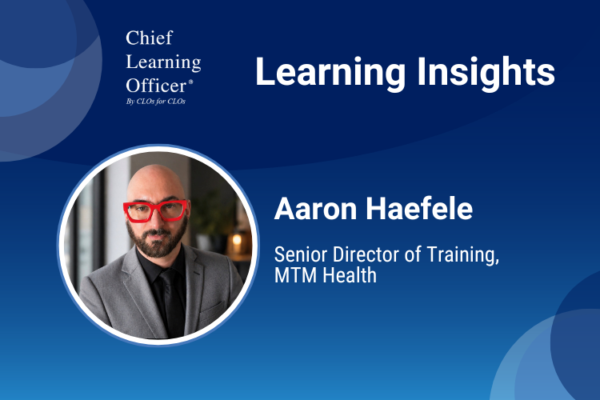

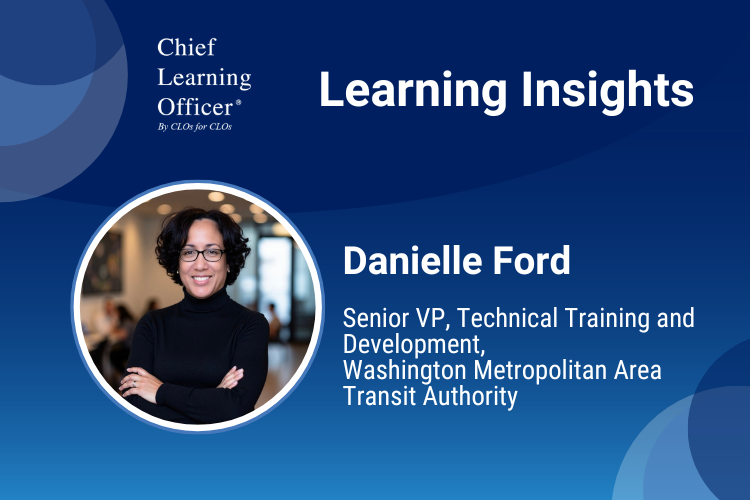
Chief Learning Officer’s “Learning Insights” series is dedicated to showcasing the thoughts and career journeys of chief learning officers and learning executives—the tireless trailblazers who are transforming the landscape of corporate learning and workforce development. In this Q&A series, we garner strategic insights, innovative approaches and challenges overcome from visionary leaders worldwide.
CLO: What initially drew you to a career in learning and development, and how have your experiences evolved over the years?
What initially drew me to learning and development was the opportunity to help people succeed. Early in my career, I was fascinated by the connection between learning, performance and organizational results. I saw training not simply as delivering information, but as a way to build confidence, improve capability and help individuals perform their jobs safely and effectively.
I was also intrigued by the role technology could play in accelerating learning and improving performance. Even early on, I recognized that the right tools, systems and innovations could help make learning more accessible, engaging and impactful.
Over the years, my perspective has evolved significantly. I began focusing primarily on instructional delivery and on developing people at the individual level. As my leadership responsibilities expanded, I came to understand that effective training organizations do much more than deliver courses. They build workforce capability, support culture change, improve safety, strengthen leadership pipelines and leverage technology to prepare employees and organizations for future challenges.
Today, as an executive leader overseeing technical training and workforce development, I view training, learning and technology as inseparable. My work is centered on aligning workforce development with organizational goals, regulatory requirements, workforce readiness and operational excellence. Whether it’s advancing safety initiatives, modernizing learning technology, implementing a new LMS, exploring artificial intelligence-enabled performance support or leveraging extended reality to enhance workforce capability, my focus is on ensuring people have the knowledge, tools and experiences they need to succeed.
What excites me most is the opportunity to use technology not as a replacement for human expertise, but as a force multiplier for it. Technologies like AI and XR have the potential to transform how we onboard, develop, qualify and support employees throughout their careers, helping organizations build capability faster while preserving critical institutional knowledge.
What has remained constant throughout my career is the belief that investing in people is one of the most powerful ways an organization can achieve sustainable success. Technology will continue to evolve, but people remain at the center of every great organization. Seeing individuals grow, teams become more capable and the organization perform at a higher level continues to be the most rewarding part of the work.
CLO: What key initiatives have you implemented as a learning leader to drive employee development and foster a learning culture?
Throughout my career, I’ve focused on moving L&D beyond traditional training delivery and positioning it as a strategic business partner. A key part of that work has been ensuring learning directly supports workforce readiness, operational performance, safety and organizational transformation.
Some of the key initiatives I’ve implemented include:
- Modernizing learning technology and infrastructure by leading efforts to improve learning systems, strengthen reporting and analytics, and create greater visibility into qualifications, certifications and workforce readiness.
- Advancing workforce readiness through SAT governance by strengthening the systematic approach to training (SAT), ensuring training programs are performance-based, auditable and aligned with operational and regulatory requirements.
- Building leadership capability through leadership development programs that equip managers and supervisors with coaching, accountability and performance management skills, helping create a culture where learning is reinforced on the job.
- Driving innovation in learning by exploring and piloting emerging technologies, including immersive learning solutions such as AR/VR and other technology-enabled approaches that improve knowledge retention and job performance.
- Establishing learning as a strategic partner by ensuring training is linked to business outcomes, safety performance, employee development, succession planning and organizational goals rather than being viewed solely as a compliance requirement.
- Creating a continuous learning culture by encouraging leaders at all levels to view development as an ongoing responsibility, promoting coaching, knowledge sharing, recognition, and opportunities for employees to grow both professionally and personally.
What I’m most proud of is helping create an environment where learning is not seen as an event, but as a continuous process that supports employee success, organizational resilience and long-term business performance. As the workforce and technologies evolve, fostering curiosity, adaptability and continuous improvement becomes increasingly important to organizational success.
CLO: What is the most impactful learning program you’ve introduced in your organization, and how has it contributed to employee growth and business success?
The most impactful learning initiative I’ve led has been the transformation of our technical training organization through a standardized, SAT-based workforce development model. Rather than viewing training as a series of courses, we redesigned the learning ecosystem to align directly with job performance, safety requirements, operational readiness and regulatory compliance.
The program established consistent governance, role-based qualification and certification pathways, instructor readiness standards, performance-based learning and stronger alignment between operational needs and workforce development. It also created greater accountability for ensuring employees not only completed training but demonstrated the competence required to perform safely and effectively.
From an employee development perspective, the program provided clearer career paths, more structured development opportunities, improved coaching and mentoring, and greater visibility into qualifications and certifications. Employees gained a better understanding of what was required to progress, strengthen their skills and prepare for future leadership or technical roles.
From a business perspective, the impact has been significant because it connected learning directly to organizational outcomes. The model strengthened workforce readiness, supported regulatory and audit requirements, improved consistency in training delivery, enhanced safety culture and ensured training investments were focused on measurable performance outcomes rather than training activity alone.
What makes this initiative especially meaningful is that it helped shift the perception of L&D from a support function to a strategic business partner. Today, learning is viewed as a critical enabler of safety, operational excellence, succession planning, leadership development and long-term organizational success.
CLO: What is a common misconception people might have about the L&D function, and how do you address it?
One of the most common misconceptions about technical training is that our role is simply to deliver classes and ensure employees complete required training. In reality, technical training is about building workforce capability and operational readiness.
In safety-critical industries like public transportation, success isn’t measured by course completions or training hours. It’s measured by whether employees can perform their jobs safely, competently and consistently in the field.
Another misconception is that technical training operates separately from the business. Effective technical training must be deeply connected to operations, maintenance, safety, regulatory requirements and workforce planning. Our responsibility is not just to teach procedures. It’s to ensure the organization has a qualified workforce capable of executing its mission.
I address this misconception by focusing conversations on performance outcomes rather than training activities. Instead of asking, “How many people attended training?” I ask, “Are employees demonstrating proficiency? Are we reducing risk? Are we improving workforce readiness? Are we preparing the next generation of skilled employees?”
Technical training is ultimately a strategic workforce function. It supports safety, reliability, operational excellence, knowledge transfer, qualification and certification and long-term organizational resilience. When organizations recognize that connection, technical training shifts from being viewed as a support service to being recognized as a critical business enabler.
CLO: What excites you the most about the future of workplace learning, and how are you preparing your organization to adapt to the changing landscape?
What excites me most about the future is that we’re moving beyond the traditional model of training being confined to a classroom, a course, or even a learning management system. The future is about embedding learning, performance support and knowledge transfer directly into the work itself.
The future of technical training isn’t about delivering more training; it’s about creating a workforce development ecosystem where technology, data and human expertise work together to build competence faster, preserve critical knowledge and improve organizational readiness.
As organizations face skilled labor shortages, retirements, evolving technologies, and increasing operational complexity, we have an opportunity to fundamentally rethink how we develop workforce capability. Technologies such as AI, XR, data analytics and digital knowledge management are enabling us to provide learning and support at the moment of need rather than only during scheduled training events.
I’m particularly excited about the potential of XR. While many people think of XR as a classroom simulation tool, I believe its value extends much further. XR has the potential to support the entire workforce development lifecycle, from recruiting and onboarding to qualification, skills maintenance, procedural practice, troubleshooting and knowledge transfer. It allows employees to safely practice complex tasks, experience scenarios that are difficult to replicate in the field and build confidence before performing work in operational environments.
I’m equally excited about the role of AI. AI has the potential to personalize learning, accelerate content development, improve knowledge management, identify skill gaps and provide employees with real-time access to information and performance support. For technical organizations, AI can help capture institutional knowledge before experienced employees retire and make that expertise more accessible to the next generation of workers.
As a technical training leader, my focus is ensuring we embrace these technologies thoughtfully. Technology should not replace hands-on experience, coaching or operational expertise. Instead, it should enhance them. We’re preparing by modernizing our learning ecosystem, exploring immersive learning technologies, strengthening workforce analytics, improving qualification and certification visibility and ensuring our training strategies remain aligned with operational performance and workforce readiness goals.
Ultimately, what excites me most is the opportunity to move from training people for jobs to continuously developing workforce capability throughout an employee’s career. The organizations that succeed will be those that view workforce development as a strategic advantage and leverage technology to make learning faster, more effective and more accessible while never losing sight of safety, performance and operational excellence.
CLO: What essential qualities or skills make a successful L&D leader, and how do you cultivate these traits in yourself and among your team?
I believe successful L&D leaders need a combination of business acumen, operational credibility, strategic thinking, and a genuine commitment to developing people. It’s no longer enough to be an expert in learning theory. We have to understand the business, the workforce, and the outcomes we’re trying to achieve. As SVP of technical training and development, my role is not simply to deliver training.
It’s to ensure our workforce is prepared, capable, and ready to perform safely and effectively. Four qualities stand out as especially important:
- First, business and operational acumen. Effective learning leaders must understand the environment they support. In technical and safety-critical industries, credibility comes from understanding operations, workforce challenges, performance expectations and the realities employees face every day.
- Second, strategic thinking. Great L&D leaders connect learning to business outcomes. They move beyond training completion metrics and focus on workforce readiness, performance improvement, employee development, safety and organizational goals.
- Third, adaptability and continuous learning. Technology, workforce expectations, and business demands are evolving rapidly. Learning leaders must be curious, willing to challenge established approaches and open to innovation while remaining focused on what drives performance.
- Fourth, developing others. Leadership is ultimately about people. The ability to coach, mentor, influence and create growth opportunities for others is what separates good leaders from great leaders.
I cultivate these traits in myself by staying connected to the business, seeking feedback, learning from peers, and intentionally making time for reflection and growth. I also try to lead with humility, recognizing that no one has all the answers and that continuous improvement applies to leaders just as much as it does to employees.
Within my team, I create opportunities for leaders to take on new challenges, lead initiatives, solve complex problems and learn from both successes and failures. I encourage coaching, collaboration and knowledge sharing because leadership capability is built through experience, not just formal training. My goal is to develop leaders who can think strategically, lead confidently and continue building the next generation of talent.
CLO: What game-changing advice would you offer if you could go back in time and mentor your younger self?
If I could go back and mentor my younger self, I would say: Stop believing that you have to carry everything yourself.
Early in my career, I thought leadership meant having all the answers, solving every problem and proving my value by working harder than everyone else. What I’ve learned is that the strongest leaders are not the ones who carry the organization on their shoulders. They’re the ones who build capable teams, develop other leaders and create environments where people can succeed without depending on them for every decision.
I would also tell myself not to be in such a hurry to achieve the next title or milestone. Career growth is important, but leadership is really about learning how to influence, listen, build relationships and earn trust. The experiences that felt like setbacks often became the moments that taught me the most about resilience, humility and leadership.
Finally, I would remind myself that investing in people is never a distraction from the work; it is the work. The projects, initiatives and accomplishments are important, but the impact you have on people’s growth, confidence and careers is what lasts. Years later, people rarely remember every program you implemented, but they do remember how you helped them develop, overcome challenges and believe in themselves.
So my game-changing advice would be: Focus less on proving your value and more on multiplying your impact through others. When you help others succeed, your own success will follow.
CLO: What do you feel is currently the single biggest challenge facing L&D professionals and the industry as a whole?
From a technical/frontline workforce perspective, I would say the single biggest challenge facing L&D today is: Keeping workforce capability aligned with the pace of operational, technological and generational change while maintaining safety, reliability and productivity.
In industries like transit, transportation, manufacturing, utilities and construction, we’re experiencing a perfect storm. Many organizations are facing retirements of highly skilled employees, increasing technology adoption, evolving regulatory requirements and a shrinking pipeline of experienced workers entering the workforce. At the same time, the work itself is becoming more complex.
What makes this especially challenging is that you can’t simply train your way out of the problem.
Frontline employees need more than knowledge. They need the ability to apply skills in real-world environments, troubleshoot problems, adapt to new technologies and perform safely under operational pressures. As learning leaders, our responsibility is to accelerate competence without sacrificing quality or safety.
I believe the industry is moving away from asking: “Did the employee complete the training?”
And toward asking: “Can the employee perform the job safely, consistently and independently?”
This conversation is very different from corporate learning.
For technical training organizations, this means we must:
- Focus on performance and proficiency, not just course completion.
- Capture institutional knowledge before experienced employees retire.
- Develop stronger frontline leaders and coaches who reinforce learning on the job.
- Leverage technology thoughtfully while recognizing that hands-on experience remains essential.
- Create clear qualification and certification pathways that help employees understand how to grow and succeed.
The organizations that will be most successful are those that treat workforce development as a strategic business imperative, not an administrative function. In safety-critical environments, learning is not just about employee development. It is directly tied to operational readiness, service reliability, regulatory compliance and public safety.
Interested in being featured in our “Learning Insights” series? Please complete this FORM.