
I was having coffee with a friend recently who has been in the learning space for a long time, and honestly, they looked exhausted. When I asked what was going on, they voiced a reality that is mostly going unsaid among L&D leaders these days: “My team is scared. And I don’t disagree with them, to be honest. Are we even going to have jobs in a year?”
I get it — I’ve had those thoughts too.
But then I came across research that reframed everything for me. Without oversimplifying a genuinely complex topic, the data suggests that the majority of work will eventually be handled by AI. What remains for humans is a smaller, more concentrated slice, and it is the most distinctly human work we do: creative, innovative and judgment-driven. This is the kind of work that requires not just individual capability, but genuine collective intelligence.
Here’s what gave me pause: That’s our work. That’s what L&D has always been trying to build toward. We just didn’t know the stakes would get this high, this fast.
The question isn’t whether your team will survive the AI era; it’s whether you are building the kind of team that will thrive in it. And that is a very specific kind of team — one that doesn’t just perform tasks well individually, but thinks well together.
From individual to team: the unit of performance has changed
For most of the history of corporate learning, we have operated on a straightforward assumption: Develop the individual, and organizational performance follows. Better skills, better people, better results. The logic was clean, and the interventions were tractable: Train the person, measure the person, promote the person.
That model isn’t wrong, exactly, but it is no longer sufficient. When the routine, procedural, high-volume work is increasingly handled by machines, what’s left for human teams is precisely the work that can’t be done alone. Creative problems don’t get solved by one brilliant person in isolation. Innovation happens in the friction between different perspectives. Judgment calls require people who trust each other enough to disagree productively and commit together.
The unit of performance isn’t the individual anymore. It’s the team.
Unfortunately, most of our learning infrastructure hasn’t caught up to that fact. This is the massive shift facing modern leadership development frameworks: We must stop optimizing for individual capability in isolation and start building teams that are optimized for collective intelligence.
The field has a specific term for this collective intelligence: team cognition. Team cognition is defined as the collective capacity of a team to process information, coordinate knowledge and make unified architectural decisions in high-stakes environments. It may be the most important asset we build in the next five years.
What L&D leaders must know to build a team cognition culture
Team cognition isn’t a feeling or a vibe; it’s a set of conditions that either exist in a team or they don’t. As L&D leaders, our job is to build those conditions deliberately. Three core pillars matter most:
1. Explicit communication norms
High-performing creative teams share one habit above all others: They make their thinking visible. They don’t assume their colleagues know the context they’re working from; they say the quiet part out loud. They name their assumptions, surface their uncertainties and invite pushback before a decision solidifies into a direction.
Explicit communication doesn’t happen naturally. Left to their own devices, most teams default to efficiency: Say less, move faster, avoid the discomfort of genuine disagreement. The L&D leader’s job is to make explicit communication a norm, not an exception, by modeling it, rewarding it and designing team rituals that practice and reinforce it.
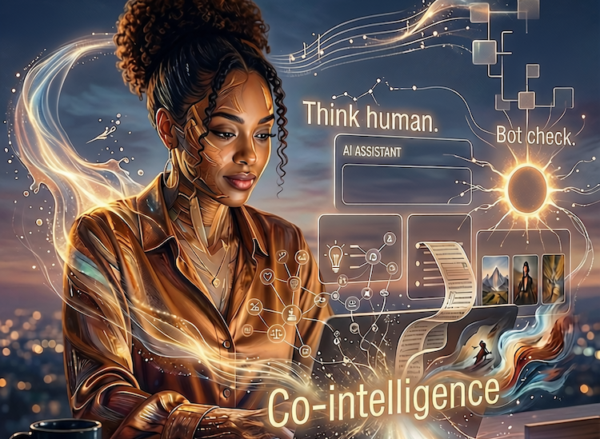
In the AI era, explicit communication practices become even more critical. When part of your team’s thinking is being done in partnership with AI tools, the humans in the room need to be especially clear with each other about what they brought to the table and what the machine contributed. Ambiguity about that erodes the trust that creative work depends on.
2. Shared mental models
Imagine two people trying to solve a problem when one is working from a map of the terrain and the other is working from a completely different map. They can be equally intelligent, motivated and well-intentioned, and still talk past each other at every turn.
Shared mental models are the common maps a team uses to understand their work, their goals, their roles and each other. When they exist, coordination becomes almost effortless. When they don’t, even simple decisions require exhausting amounts of alignment work. Building these models is a foundational learning design problem that requires deliberate onboarding, structured reflection and team practices that reconcile different understandings before they calcify into conflict.
It also requires a team leader who notices and names the moments when mental models diverge instead of pushing through.
3. Trust architecture
This is the foundation everything else rests upon. We view this not as a passing emotion, but as a structural reality — the explicit, designed conditions under which a team can experiment, fail at a small scale, learn from what happened and try again without fear of career consequences.
Your most creative team members are also often your most risk-averse, because they care deeply about doing good work and have the most to lose if something goes wrong. A trust architecture gives them permission to bring their most innovative thinking — not just their safest ideas — to the table.
Building a trust architecture means leaning directly into the AI ethics conversation. Your team has questions they’re not asking out loud: Is it appropriate to use AI in this work? What do we owe our clients in terms of transparency? Where does AI assistance end and plagiarism begin?
Our profession has a long and serious ethic around integrity, attribution and authentic authorship. AI sits in an uncomfortably gray zone for people who take that ethic seriously.
A leader who names that tension openly, who invites the team into a genuine conversation about norms rather than handing down a policy, is doing something more important than compliance management. They are building the psychological safety that makes everything else possible.
Two strategic enablers for team success
Beyond the three conditions described above, two enabling factors make or break a team cognition culture:
A clear line to strategy
Here’s where many learning functions are most vulnerable. When training exists as a catalog of offerings disconnected from the organization’s strategic priorities, it is easy to cut. It looks like overhead. It feels like a luxury.
When learning is visibly, explicitly connected to what the organization is trying to accomplish, when the L&D leader can stand in the executive suite and draw a direct line from a learning initiative to a business outcome, the function becomes indispensable: not merely safe, but sought-after.
This requires the L&D leader to be a student of the business, not just a practitioner of learning. It requires relationships with leaders across the organization. And it requires the discipline to say “no” to learning initiatives that are interesting but strategically disconnected, in order to say a more powerful “yes” to the ones that matter.
The right tools, clearly understood
Teams cannot think well together if they are fighting their tools. L&D leaders must do the quiet, unglamorous, essential work of removing friction from the team’s access to the technology they need and ensuring that the team has genuine fluency with those tools.
Access to AI tools is not enough. Our goal is not AI adoption for its own sake; it’s giving our team the fluency they need to use AI as a true thought partner in creative work. That’s a more difficult and demanding process than using it as a shortcut.
Back to the coffee shop
My friend with the tired eyes wasn’t wrong to be worried. The landscape is genuinely changing, and the pace of that change is genuinely unsettling. The fear is reasonable.
But the work that remains for human teams is not a consolation prize. It is the most interesting, most demanding and most meaningful work there is: creative problem-solving, innovation, judgment in the face of uncertainty and connection across differences. We have always been trying to build these capabilities; the AI era is simply making that more urgent.
The L&D leaders who thrive in the next five years will be the ones who stop asking how to protect their function and start asking how to build teams that are genuinely optimized for the work only humans can do. That is a harder question, but it is also a more important one. Your team is watching to see if you believe it’s worth answering.