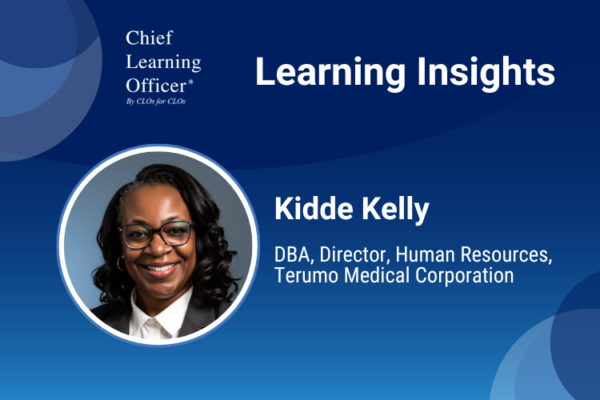

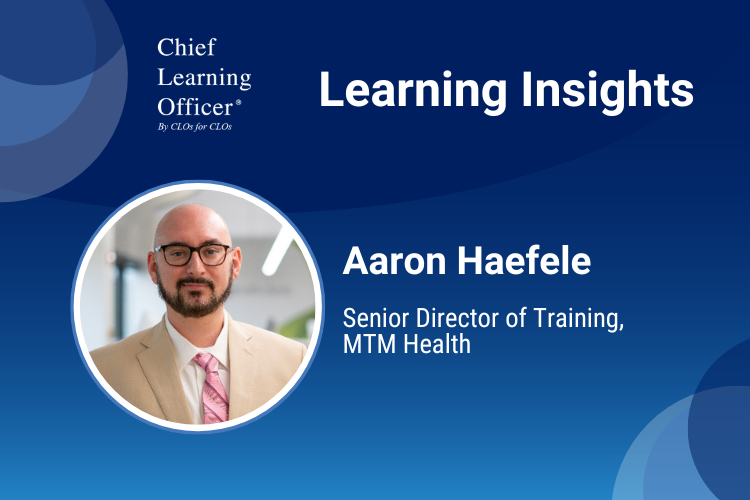
Chief Learning Officer’s “Learning Insights” series is dedicated to showcasing the thoughts and career journeys of chief learning officers and learning executives—the tireless trailblazers who are transforming the landscape of corporate learning and workforce development. In this Q&A series, we garner strategic insights, innovative approaches and challenges overcome from visionary leaders worldwide.
CLO: What initially drew you to a career in learning and development, and how have your experiences evolved over the years?
What initially drew me to a career in learning and development was a genuine interest in helping people learn, grow and be successful. Early in my career, I found a lot of fulfillment in teaching and coaching others. I started as an instructor at a massage therapy school and later had opportunities to train employees in a call center environment. In both settings, I enjoyed seeing people build confidence, develop new skills and realize their potential.
One thing I learned very early on was the importance of deep listening. The best trainers aren’t just good at delivering information—they take the time to understand what people need, what challenges they’re facing and how they learn best. Listening to people’s experiences and perspectives helped me connect with them more effectively and ultimately made me a better educator and leader.
Over the years, my view of L&D has evolved considerably. What started as a passion for training individuals has grown into a broader focus on developing talent, enabling organizational change and supporting business outcomes. Today, I see L&D as a strategic function that helps people perform at their best while also helping organizations achieve their goals.
While the tools, technologies and responsibilities have changed throughout my career, what continues to motivate me is the opportunity to invest in people. Whether it’s helping someone learn a new skill, grow into a leadership role or navigate a major change, there’s nothing more rewarding than seeing someone succeed because they were given the right support, guidance and opportunity. That’s what has kept me passionate about L&D from the beginning, and it’s what continues to inspire me today.
CLO: What key initiatives have you implemented as a learning leader to drive employee development and foster a learning culture?
A few of the key initiatives I’ve implemented as a learning leader include developing competency maps for roles across the organization, launching tuition reimbursement and certification reimbursement programs and creating clearer development pathways for employees at all levels.
One of the accomplishments I’m most proud of is helping foster a culture of lifelong learning at MTM. To me, lifelong learning means recognizing that none of us are ever finished growing. As individuals, leaders and organizations, we have to continue evolving, adapting and improving if we want to be successful.
CLO: What is the most impactful learning program you’ve introduced in your organization, and how has it contributed to employee growth and business success?
One of the most impactful learning programs I’ve introduced is our art of client communication program. The program is designed for managers and executive leaders and focuses on strengthening how we engage with external stakeholders and clients. Through a cohort-based experience, participants examine every aspect of client interactions—from preparation and storytelling to presentation delivery, data fluency, executive presence and relationship building.
The goal is to ensure our leaders are not only knowledgeable in their areas of expertise, but also able to communicate with confidence, credibility and a deep understanding of what matters most to our clients. We challenge participants to align their approach with both MTM Health’s leadership competencies and the values and priorities of the clients they serve.
One of the unique aspects of the program is that it goes beyond communication skills. It encourages leaders to actively listen, understand stakeholder needs, anticipate concerns and approach client relationships from a partnership mindset rather than a transactional one. We spend a great deal of time helping leaders think critically about how they prepare for meetings, tell compelling stories with data, and represent the organization in a way that builds trust.
The impact has been significant. The program has helped strengthen client relationships, improve customer satisfaction and NPS scores, support business development efforts and increase confidence among our leaders when interacting with external stakeholders. Just as important, it has created greater consistency in how we represent MTM across the organization.
CLO: What is a common misconception people might have about the L&D function, and how do you address it?
One of the biggest misconceptions about L&D is that our job is simply to create PowerPoints and deliver training. While training is certainly part of what we do, the reality is that the L&D function has evolved dramatically, especially as organizations embrace AI, automation and more complex ways of working.
Today, effective L&D spans everything from identifying skills gaps and assessing performance needs to designing solutions, supporting change initiatives, measuring behavioral outcomes and driving business results. At its best, L&D serves as a connector across the organization—bringing people together, aligning priorities and ensuring employees have the skills, tools, knowledge and resources they need to be successful.
I also believe L&D is uniquely positioned to play a critical role in the future of AI. AI is only as effective as the knowledge and processes that support it. Well-documented workflows, clear standards, accessible knowledge and strong competency frameworks are all foundational to successful AI adoption, and those are areas where L&D has significant expertise. In many ways, knowledge management, process mapping, performance support and AI readiness naturally fit within the modern L&D wheelhouse.
CLO: What excites you the most about the future of workplace learning, and how are you preparing your organization to adapt to the changing landscape?
What excites me most about the future of workplace learning is the incredible pace of innovation we’re seeing right now. The technology available to L&D teams today is changing the way we design, deliver and measure learning in ways I never imagined when I first entered the profession.
For years, most organizations approached training with a one-size-fits-all mindset. Everyone went through the same courses, in the same format, at the same pace. What excites me now is that we’re moving toward a future where learning can be personalized to the individual. Through AI, automation and adaptive learning technologies, we can create experiences that align with a learner’s role, skill level, career aspirations and even their preferred learning style.
We’re also able to develop and update learning assets faster than ever before. That means we can respond more quickly to business changes, support employees in real time and focus more of our energy on driving performance and less on administrative tasks. Technology is allowing L&D professionals to spend more time being strategic partners to the business.
As we prepare for this changing landscape, we’re focusing on building a strong foundation of knowledge management, clear processes, competency frameworks and continuous learning. We’re also encouraging our teams to experiment with new tools, embrace AI responsibly and think differently about how learning is delivered and consumed.
Most importantly, we’re fostering a culture where learning is part of everyday work, not just something that happens during a training event. The future of workplace learning isn’t just about technology—it’s about creating the right experiences at the right time so people can perform at their best. That’s incredibly exciting to me because it gives us the opportunity to make learning more relevant, more accessible and more impactful than ever before.
CLO: What essential qualities or skills make a successful L&D leader, and how do you cultivate these traits in yourself and among your team?
For me, the most essential quality of a successful L&D leader is being a strategic business partner. L&D can’t operate in a silo. The work we do has to be directly aligned to the organization’s goals and objectives. The best L&D leaders understand where the business is going and ensure that learning strategies, talent development efforts and performance initiatives support that vision. In many ways, we become champions of the organization’s priorities, helping employees build the skills and capabilities needed to achieve them.
Another critical skill is the ability to deeply connect with people through listening. Some of the most valuable insights I’ve gained as a leader haven’t come from surveys or reports—they’ve come from conversations with employees. It’s important to understand the challenges people are facing in their work, where performance gaps exist and what barriers may be preventing success. Just as importantly, you have to be open to feedback without taking it personally. Great L&D leaders listen, learn and use that feedback to create meaningful solutions that improve both the employee experience and business outcomes.
I also believe strong organizational skills are essential. Much of our role involves taking complex information, processes and strategies and making them simple, clear and actionable. Today’s employees don’t want to spend their time searching through multiple systems or documents to find answers. They want information delivered in the flow of work—when and where they need it. As L&D leaders, it’s our responsibility to create learning ecosystems, knowledge resources and performance support tools that make information accessible and easy to apply.
As I think about the future of our profession, I also believe adaptability and curiosity are increasingly important. The way people learn is changing rapidly, driven by technology, AI and new ways of working. Successful L&D leaders must be willing to continuously learn themselves, experiment with new approaches and help their teams embrace innovation while staying focused on outcomes.
I work to cultivate these qualities by staying closely connected to the business, spending time listening to employees and stakeholders, seeking feedback and continuously exploring new ideas and technologies. With my team, I encourage a mindset of curiosity, continuous improvement and customer focus. We challenge ourselves to think beyond training and instead ask, “What problem are we trying to solve, and how can we best support performance?” When we approach our work from that perspective, we create far greater value for both employees and the organization.
CLO: What game-changing advice would you offer if you could go back in time and mentor your younger self?
If I could go back and mentor my younger self, I would tell myself to be more confident and trust my instincts. Early in my career, I often looked for reassurance that I was doing the right thing. What I’ve learned is that if your work is aligned with the organization’s goals and you’re focused on creating value, you don’t need constant validation. I would also tell myself not to take things personally. Feedback, differing opinions and challenges are part of leadership. The sooner you learn to separate constructive feedback from personal criticism, the faster you’ll grow.
I would also encourage myself to think like a business leader, not just a learning leader. Always be budget-conscious, connect your work to ROI, and focus on outcomes rather than activities. One practical piece of advice I still live by today is to always leave a meeting with clear ownership and a due date. If there’s no deadline, priorities tend to drift. When talking with leaders, don’t just discuss what you’re delivering—talk about the business impact. If you can align your initiatives with organizational goals, establish clear expectations and demonstrate value, you’ll build credibility and drive meaningful results.
CLO: What do you feel is currently the single biggest challenge facing L&D professionals and the industry as a whole?
I believe the biggest challenge facing L&D professionals today is helping leaders understand and embrace the potential of AI and automation. Many people are still uncertain about how these technologies fit into their work, but the reality is that they can dramatically increase efficiency, scalability and personalization.
The opportunity for L&D is to help leaders move past the fear of change and see AI as a tool that enhances human performance, improves access to knowledge and allows employees to focus on higher-value work. Organizations that successfully make that shift will have a significant advantage in the future.
Interested in being featured in our “Learning Insights” series? Please complete this FORM.