
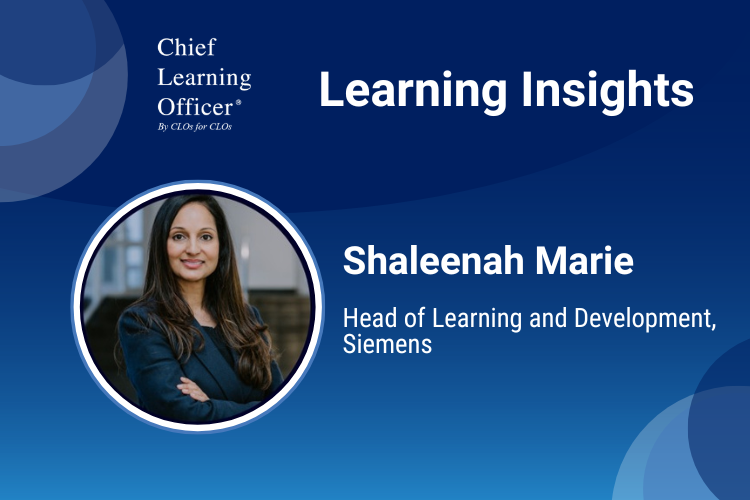
Chief Learning Officer’s “Learning Insights” series is dedicated to showcasing the thoughts and career journeys of chief learning officers and learning executives—the tireless trailblazers who are transforming the landscape of corporate learning and workforce development. In this Q&A series, we garner strategic insights, innovative approaches and challenges overcome from visionary leaders worldwide.
CLO: What initially drew you to a career in learning and development, and how have your experiences evolved over the years?
I am passionate about the empowerment of people. I was first drawn to learning and development because I’ve always believed that human potential is the most powerful catalyst for transformation. Early in my career, I saw how access to knowledge and opportunity could change the trajectory of someone’s life, and I wanted to be part of creating those pathways.
Over the years, my journey has evolved from simply delivering training to shaping ecosystems of growth. I’ve moved from focusing on skills development to building cultures of inclusion, visibility and leadership readiness. My experiences with initiatives like the UN Women’s African Girls Can Code Initiative and having founded the EmpowerHER and Allies mentorship movement have deepened my conviction that L&D is not just about knowledge transfer; it’s about agency, empowerment and preparing people to lead with courage in complex times.
Today, my work is about bridging the gap between academic insight and real-world impact. It’s about redefining leadership cognition, mentoring across generations and ensuring that learning is not a one-time event but a lifelong journey. What began as a passion for teaching has become a mission: to cultivate future-ready leaders who rise, lift others and transform the everyday into something extraordinary.
CLO: What key initiatives have you implemented as a learning leader to drive employee development and foster a learning culture?
Key initiatives I’ve implemented as a learning leader to drive employee development and foster a learning culture are:
- Reverse mentorship programs: I’ve championed reverse mentorship as a way to unlock fresh perspectives and challenge traditional hierarchies. By pairing senior leaders with younger talent, we’ve created spaces where curiosity, inclusivity and adaptability thrive.
- Leadership development journeys: Beyond once-off training, I’ve designed multi-stage leadership pathways that integrate coaching, reflection and experiential learning. These journeys help leaders evolve from “knowers” to “learners,” cultivating humility and resilience.
- Learning ecosystems: I’ve shifted focus from isolated courses to ecosystems of growth blending digital platforms, micro-credentials and collaborative communities. This ensures learning is continuous, accessible and embedded in daily work.
- Culture of psychological safety: Recognizing that learning flourishes where people feel safe to experiment, I’ve worked with leaders to model vulnerability, encourage questions and normalize failure as part of growth.
- Future skills initiatives: From digital literacy to sustainability, I’ve aligned development programs with the skills our workforce needs to remain future-ready. This includes targeted AI trainings. For me, these initiatives are not just about skills; they’re about shaping mindsets, building confidence and creating cultures where people feel empowered to rise to their potential.
CLO: What is the most impactful learning program you’ve introduced in your organization, and how has it contributed to employee growth and business success?
The program that stands out most is our reverse mentorship initiative. It was designed to connect junior employees, often digital natives, with fresh perspectives directly with leaders navigating complex transformation.
This initiative has been transformative in two ways:
- Employee growth: Junior mentors gained confidence, visibility and agency. They learned that their voices matter, and that they could influence leadership thinking. Senior leaders, in turn, developed humility, adaptability and a deeper understanding of emerging skills and generational shifts.
- Business success: The program accelerated digital adoption, fostered inclusivity and built resilience in leadership teams. It helped us anticipate disruption rather than react to it, strengthening our ability to innovate and remain competitive in fast-changing markets.
What began as a pilot quickly became a cornerstone of our learning culture. It shifted the narrative from “leaders teaching employees” to “leaders and employees learning together.” That cultural shift has been the most powerful outcome—embedding curiosity, collaboration and shared growth into the DNA of the organization.”
CLO: What is a common misconception people might have about the L&D function, and how do you address it?
- Positioning L&D as strategy: I make it clear that L&D is not a support function but a driver of business success. Every program is tied to organizational goals, whether it’s digital transformation, leadership pipelines or employee engagement.
- Embedding learning in culture: Instead of once-off workshops, I focus on building ecosystems where learning is continuous, social and embedded in daily work. This shifts the perception from “training” to “growth mindset.”
- Showcasing impact: I highlight measurable outcomes—improved retention, faster innovation cycles, stronger leadership resilience. When leaders see the ROI, they stop viewing L&D as a cost center and start seeing it as a growth engine.
- Championing leadership cognition: By introducing concepts like reverse mentorship and sensemaking, I demonstrate that L&D is about reshaping how leaders think, not just what employees know.
In short: L&D is not about ticking boxes; it’s about cultivating curiosity, resilience and future-ready leaders. That’s how I shift the narrative and ensure learning is seen as central to both human and business transformation.
CLO: What excites you the most about the future of workplace learning, and how are you preparing your organization to adapt to the changing landscape?
I’m energized by the shift toward personalized, adaptive learning where technology enables employees to learn in ways that fit their unique pace, style and career aspirations. The rise of AI-powered learning ecosystems excites me because they make knowledge accessible in real time, turning learning into a living, breathing part of daily work rather than a scheduled event.
Equally, I see the future of workplace learning as deeply human. Skills like leadership, cognition, resilience and emotional intelligence will matter more than ever in a world of automation. The opportunity to blend cutting-edge technology with timeless human skills is what inspires me most.
How I’m preparing my organization to adapt…
- Embedding continuous learning: We’re moving away from episodic training toward ecosystems where learning is always-on, accessible through micro-learning, coaching and collaborative communities.
- Future skills-mapping: I’ve aligned development programs with the skills our workforce will need—digital fluency, sustainability literacy and adaptive leadership ensuring employees are future-ready.
- Reverse mentorship: By connecting generations, we’re fostering agility and inclusivity, preparing leaders to think differently and employees to see themselves as co-creators of change.
- Culture of curiosity: We’re cultivating environments where questions are valued as much as answers, and experimentation is celebrated as a pathway to innovation.
For me, the future of workplace learning is about creating organizations that are not just resilient, but regenerative, places where people grow, adapt and thrive together.
CLO: What essential qualities or skills make a successful L&D leader, and how do you cultivate these traits in yourself and among your team?
Essential qualities and skills of a successful L&D leader:
- Strategic vision: A great L&D leader sees beyond training programs; they align learning with business transformation, ensuring every initiative drives measurable impact.
- Empathy and emotional intelligence: Understanding people’s motivations, fears and aspirations is critical. It’s not just about knowledge transfer; it’s about creating safe spaces where growth feels possible.
- Adaptability and curiosity: The landscape of work is constantly shifting. Successful leaders stay curious, embrace change and model lifelong learning.
- Influence and storytelling: To shift mindsets, you must inspire. Storytelling helps connect learning to purpose, making it memorable and magnetic.
- Coaching and mentorship: The ability to nurture others, ask powerful questions and unlock potential is at the heart of leadership development.
How I cultivate these traits in myself and my team:
- I encourage my team to engage in reverse mentorship, so we all learn from diverse perspectives.
- We embed continuous learning habits—micro-learning, peer mentoring and regular knowledge-sharing circles.
- I model vulnerability by sharing my own learning journey, showing that growth is not about perfection but progress.
In essence, being an L&D leader is about embodying the very qualities we want to cultivate in others: curiosity, courage, empathy and vision. When we live those traits, our teams don’t just follow—they rise.
CLO: What game-changing advice would you offer if you could go back in time and mentor your younger self?
I would tell her: “Trust the process of becoming, even when the path feels uncertain.”
When I was younger, I often thought success meant having all the answers upfront. What I’ve learned is that growth comes from embracing the unknown, leaning into curiosity and allowing each experience, even the difficult ones, to shape resilience and wisdom. I’d remind her that:
- Failure is feedback—every setback is a stepping stone, not a dead end.
- Authenticity is power—the courage to lead with your true voice will open doors that imitation never could.
- Relationships matter most—invest in people, because mentorship, collaboration and community are the real accelerators of success.
- Curiosity fuels growth—never stop asking questions, even of yourself.
Above all, I’d tell her: “You don’t have to be perfect to be impactful. You just have to be willing to rise, again and again.”
CLO: What do you feel is currently the single biggest challenge facing L&D professionals and the industry as a whole?
I believe it is the tension between keeping pace with rapid change and proving measurable impact. On one hand, the workplace is evolving faster than ever—AI, automation, hybrid work and shifting employee expectations demand new skills almost overnight. On the other hand, organizations increasingly demand evidence that learning investments deliver tangible business outcomes. Balancing agility with accountability is the defining challenge of our time.
How I address it:
- Future skills alignment: I ensure every program is mapped to the skills our workforce will need – digital fluency, adaptability, sustainability literacy and leadership cognition.
- Data-driven learning: We use analytics to track engagement, application and business impact, shifting the narrative from “training hours” to “performance outcomes.”
- Culture of curiosity: By embedding learning into daily work, we make it part of the organizational DNA, not a separate activity.
- Reverse mentorship: This initiative bridges generational knowledge gaps, accelerates digital adoption, and demonstrates how learning can directly fuel transformation.
In short: The challenge is proving that learning is not just relevant but indispensable. The solution lies in making L&D both agile enough to anticipate disruption and rigorous enough to demonstrate impact.
Interested in being featured in our “Learning Insights” series? Please complete this FORM.